

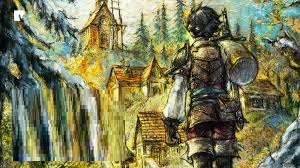
Great RPGs can live or die by their final chapters – what’s been built up through a long journey could pay off with major revelations that leave a lasting mark or fall flat with cliches that undermine its best ideas. I spent over 100 hours with Octopath Traveler 0, and although I’d say about 80 of those are pretty good overall, thanks to a fair share of ups and downs, it’s those last 20-or-so hours where it ascends to true greatness. If that sounds far too daunting, I get it, it’s a big-time investment – but what you get in return is something that only games of this scale can pull off, making good on its various story branches and stunning you with one moment after another as you approach its wild conclusion. While Octopath already had a brilliant turn-based combat system, this iteration adds its own quirks to freshen things up as the HD-2D art style delivers its unique brand of modernized nostalgia yet again. And along with an outstanding soundtrack to beautifully frame both pivotal and quiet moments alike, Octopath Traveler 0 shows that this series can and has pushed the genre to new heights.
Octopath Traveler 0 is largely a repackaging of the mobile game Octopath Traveler: Champions of the Continent, which is a prequel to the original entry. But by axing the microtransactions and gacha elements used to recruit party members, as well as introducing some very important additions to story and gameplay, it has become a fully fledged RPG worthy of this wider release. I’m a bit shocked that this game, in particular, was once a mobile exclusive because it’s built as a traditional RPG, and I’m thrilled it exists in this form since I would have otherwise missed out on some of my favorite moments from any recent game.
It’s not all smooth sailing, which isn’t surprising—any 100-hour RPG is bound to have its valleys between the peaks. My biggest reservations came in the first half, particularly with the story. While I didn’t expect a deeply nuanced script or complex character studies, some dialogue and plot beats felt shallow. Villains were comically evil, which made them satisfying to defeat, but their one-dimensional thirst for power and cruelty left them less compelling as characters. Even so, Octopath Traveler 0 maintains a decent pace, never lingering too long on any single thread.
This momentum comes largely from the structure of the main quest. After a tragic prologue in which your hometown is destroyed, you follow three story branches pursuing the trio of villains—each themed around power, fame, or wealth. These paths converge roughly 40 hours in, concluding the first half of the game. Don’t be fooled by the early fakeout credits roll; the story has far more to reveal. From there, three new questlines pick up the same themes, retreading familiar ground but raising the stakes as the world of Orsterra grows more complex. Warring kingdoms, corrupt religious institutions, and pervasive betrayal begin to have tangible consequences, and the story gains real momentum as the bigger picture comes into focus.
Few games flourish as much as Octopath Traveler 0, I can nearly assure you
Instead of juggling eight separate stories running in parallel, Octopath Traveler 0 delivers a tighter, more focused narrative by weaving its themes together, placing your custom character at the center, and highlighting key figures when necessary. While your silent protagonist might initially feel like a standard “chosen one,” the story’s focus on the world’s eight rings of godly power turns a familiar setup into a strong foundation for deeper messages. Octopath Traveler 2 succeeded with its cast of eight, and though it was one of my favorite games of the last decade, this shift in approach feels smarter and more cohesive. The trade-off is that most of the 30-plus recruitable party members feel disposable, but the slight dissonance is worth it for the payoff.
Much like other seemingly minor features in the game, the extensive roster eventually matters in meaningful ways. Recruiting as many characters as possible pays off in unexpected, jaw-dropping moments—even for someone like me, who’s played nearly every major JRPG out there. It’s a strong example of how the game makes you care about seemingly trivial details and rewards you in hindsight. While trimming some of the less essential content (particularly sections that lean on problematic tropes or naive politics) could have tightened the experience further, the time spent on main questlines fosters a genuine understanding of Orsterra’s people and the leaders you ally with, making the narrative’s big moments feel earned.
Without giving away spoilers, once you reach the “final” questline in Octopath Traveler 0, the game completely ramps up—it almost felt like an entirely new experience. Dungeons become more intricate, boss fights far more challenging, character arcs come full circle, and motives start to make much more sense. While many stories opt for complex or sympathetic villains, the true antagonist here is an impressively crafted, deeply emotional, and intense exploration of the archetype. The revelations landed hard because they’re grounded in realism, with gameplay mechanics and music used as storytelling tools to convey the narrative without overt exposition. The more I unpacked the layers of the final chapters, the more they stayed with me, long after finishing the 0-exclusive true ending at 106 hours.
The turn-based combat, already a highlight of Octopath Traveler 2, shines here in new ways. The Boost and Break systems add depth to the usual elemental-affinity dynamics, making turn planning more strategic. Discovering enemy weaknesses can be somewhat repetitive at first, but once you know them, devising attacks to break enemies and maximize hits is incredibly satisfying. Managing each party member’s Boost points for extra attacks or stronger spells adds another layer of tactical planning, especially when facing bosses who can inflict status ailments or wipe your team in a single turn. Octopath leverages retro HD-2D visuals to evoke nostalgia, yet it consistently sets a high bar for modern turn-based combat.
For turn-based combat systems, this series has consistently raised the standard.
Party composition in Octopath Traveler 0 is a notable shift, as you now have eight active members at all times—four in the front row and four in the back. With a roster of over 30 characters, it can feel overwhelming to manage. While the core combat system remains familiar, pairing characters within rows introduces a fresh strategic layer and provides ample flexibility. Each member builds Boost points individually, letting you unleash powerful attacks more frequently and maintain a faster battle pace than previous entries. The trade-off is reduced individual character depth—most characters have only one Job (aside from your protagonist)—but mastering Job skills allows you to equip them across other party members to diversify movesets.
While I found Octopath Traveler 2’s character progression more meaningful due to its connection with individual storylines, Octopath 0 offers a welcome change of pace while still hitting the series’ turn-based highs. Slow-motion cinematic cuts for Max Boost attacks and each character’s dramatic limit break remain thrilling, giving combat visual flair that truly shines in the HD-2D style. Planning attacks to push past the 9,999 damage soft cap requires foresight and tactical thinking that isn’t spelled out, making the payoff for figuring it out extremely satisfying. Random encounters can feel overbearing at times, but that tedium is a small price to pay for the exhilaration of landing a Break and unleashing full-powered abilities to overcome a boss that once seemed impossible.
Party composition in Octopath Traveler 0 is a notable shift, as you now have eight active members at all times—four in the front row and four in the back. With a roster of over 30 characters, it can feel overwhelming to manage. While the core combat system remains familiar, pairing characters within rows introduces a fresh strategic layer and provides ample flexibility. Each member builds Boost points individually, letting you unleash powerful attacks more frequently and maintain a faster battle pace than previous entries. The trade-off is reduced individual character depth—most characters have only one Job (aside from your protagonist)—but mastering Job skills allows you to equip them across other party members to diversify movesets.
While I found Octopath Traveler 2’s character progression more meaningful due to its connection with individual storylines, Octopath 0 offers a welcome change of pace while still hitting the series’ turn-based highs. Slow-motion cinematic cuts for Max Boost attacks and each character’s dramatic limit break remain thrilling, giving combat visual flair that truly shines in the HD-2D style. Planning attacks to push past the 9,999 damage soft cap requires foresight and tactical thinking that isn’t spelled out, making the payoff for figuring it out extremely satisfying. Random encounters can feel overbearing at times, but that tedium is a small price to pay for the exhilaration of landing a Break and unleashing full-powered abilities to overcome a boss that once seemed impossible.
Verdict
Reflecting on my time with Octopath Traveler 0, especially after the adrenaline of finishing its massive final boss and intricate conclusion, I’ve come to appreciate just how much every part of the game matters. Despite occasional bumps and low points across its 100-plus hour runtime, each element contributes meaningfully to the experience. The final hours, in particular, reveal how daring and poetic the game truly is—an emotional journey that only fully resonates at the end. In many ways, it’s a quintessential RPG: a dynamic turn-based combat system, gorgeous HD-2D visuals, narrative depth woven into battles against gods, and a soundtrack that elevates every moment. Not everyone will invest the time needed for it to fully bloom, but for those who do, few games achieve the kind of lasting impact and artistry that Octopath Traveler 0 delivers.
