




Depending on who you ask, beat ’em ups are either mindless, button-spamming quarter eaters or surprisingly elegant games built around mastering combat. I’m firmly in that second group. The real challenge is getting people who don’t share that obsession to care. How do you invite them onto that path? Absolum tried earlier this year by blending a rock-solid beat ’em up with an average roguelite. Tribute Games goes another way. Drawing inspiration from classic Marvel vs. Capcom fighters, the team behind Shredder’s Revenge poses a bold idea: what if a beat ’em up worked as a tag system where you juggle multiple heroes? Conceptually, it’s fantastic—though Cosmic Invasion doesn’t fully reach the heights that idea promises.
To be honest, I’m not deeply invested in Marvel. My dad raised me on comics, but his passion was always DC—he literally owns every Wonder Woman issue ever printed—so I grew up more of a DC fan, with a fondness for indie titles. That said, I’ve always been drawn to Marvel’s stranger corners, especially the tangled X-Men timelines and the cosmic side of its universe. It may not be Marvel’s biggest draw, but it’s easily the most intriguing to me, and I’ll take that over the MCU style any day.
As the title suggests, that’s essentially the whole premise of Marvel Cosmic Invasion. The plot is stripped down and straight out of a big crossover comic arc. Annihilus unleashes his Annihilation Wave across the galaxy, threatening all life everywhere. The universe is on the brink, so a scrappy lineup of Marvel heroes—some from Earth, others from deep space—bands together to stop him. That’s the setup, and honestly, it does the job just fine.
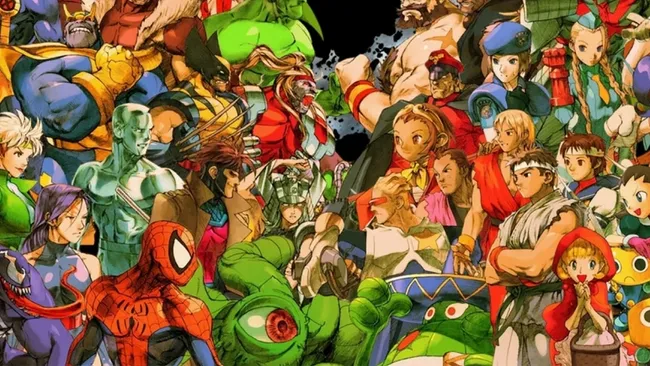
A huge part of that success comes from the 15-character roster Tribute Games put together. You’ve got the obvious must-haves—the legendary faces everyone expects to see, like Storm, Wolverine, Spider-Man, and Captain America. Then some characters used to sit on the B-list before movie fame boosted them, including Black Panther, Iron Man, Rocket Raccoon, She-Hulk, Nova, Phoenix, and Venom. Finally, there’s the delightfully oddball side of the roster. Thor doesn’t make the cut, but Beta Ray Bill does, which real fans will appreciate. Cosmic Ghost Rider shows up, Phyla-Vell gets some love, and since this is cosmic Marvel, the Silver Surfer is here too—looking exceptionally built. Whoever at Tribute Games made sure of that: respect.
The spirit work is so beautiful that everyone looks amazing.
Still, the truth is that every character looks incredible, thanks to pixel art sprites that are flat-out beautiful. From Phyla-Vell’s hair subtly moving with the breeze, to Wolverine’s constant, coiled tension, to those brief moments where Eddie Brock peeks through the Venom symbiote, Cosmic Invasion nails each hero’s identity visually and audibly. Even the voice work feels spot-on—watch any of the videos and tell me the characters don’t sound exactly the way Wolverine, Storm, or Iron Man do in your mind. For longtime fans, the atmosphere is flawless.
In terms of structure, Cosmic Invasion sticks closely to classic beat ’em up design. There are 15 stages, not counting the tutorial, set across familiar Marvel locations like New York City, Wakanda, the Savage Land, and Genosha, alongside stranger places such as Fort Galactus. Each stage gets a playful subtitle—Genosha is “Heavy Metal,” while the Savage Land is dubbed “Rumble in the Jungle.” Progression mostly follows a linear path, though it occasionally splits, requiring you to clear both routes before rejoining the main line forward.
The stages themselves are solid but fairly standard for the genre, occasionally mixing in environmental hazards to keep things moving. Each level includes a collectible to hunt down and three challenges to complete. Two of these are tied to specific heroes—like taking out a set number of enemies using a particular character’s special move—while the third is tied to the stage. It’s a smart system that nudges you to experiment with different heroes and learn how each arena works. The levels are well-paced, taking roughly 10 to 15 minutes apiece, and they stand out visually—you’ll never confuse the Savage Land with Klyntar or Genosha—but none of it pushes the beat ’em up formula into new territory.
Where Cosmic Invasion really shines is in its roster. The game supports up to four players, with each person controlling a pair of characters, and it’s striking how distinct each hero ultimately feels, even if those differences aren’t obvious at first glance. Nova and Iron Man, for example, both rely on ranged energy attacks, but Nova’s shots pierce through multiple enemies, while Iron Man’s stop short. Nova’s special creates an energy field that damages nearby foes, whereas Iron Man unleashes a massive, Marvel vs. Capcom 2–style laser that can hit anyone on screen—provided you line it up correctly and aim with care.
The levels themselves are decent but unimpressive beat-em-up material.
Rocket, for instance, excels at range, but his charged heavy attack hits absurdly hard. Phyla-Vell, on the other hand, leans toward melee and brings a unique stun-focused kit—no one else has anything like her sword, which she can toss and then warp to, letting her start combos at one end of the screen and continue them on the other. Beta Ray Bill and Captain America can both throw their weapons too, but they behave very differently. Cap’s shield boomerangs right back to him, while Bill’s hammer spins in place, potentially trapping enemies in a juggle u.
ntil you actively summon it back. Even She-Hulk and Wolverine, both close-range bruisers, feel distinct to play. Logan is quick and built around stitching together long, rapid combos, while Jen hits like a truck, favoring shorter strings that pop enemies into the air for follow-ups. They both have grabs, but those mechanics work in completely different ways.
Defensively, the cast is just as varied. Some heroes rely on dodges, while others can block and parry with proper timing, adding more layers to survival and counterplay. Flying characters have a clear advantage against aerial enemies and find it easier to avoid ground-based rushes. Every hero has their own quirks, and those differences significantly shape how each one handles in combat.
The tag system, however, is where things really get exciting. You directly control only one hero, while your partner can be called in for assist moves that keep the pressure on and open up creative offensive options. Those assists can take many forms—a launcher, a standard combo, a character’s unique skill, or even a full-on meter-burning “wipe them out” special. Discovering strong pairings and seeing how different moves complement each other is genuinely satisfying, especially since not every character is available from the start. If one hero gets knocked out during a stage, it’s not the end of the run. Each character has their own health bar, and if one goes down, you carry on with the other. Find some classic floor food, and the fallen partner can rejoin the fight with a bit of health restored.
On top of that, heroes gain experience the more you use them, unlocking additional health, passive bonuses, and other perks, which pushes you to try out different characters—particularly in co-op. I went through the entire campaign with my wife in about three hours, and while Cosmic Invasion holds up on its own, it shines brightest the way most beat ’em ups do: played alongside friends.
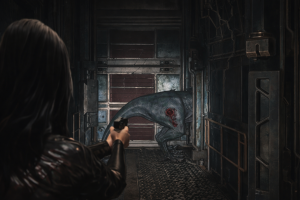
If Cosmic Invasion has a noticeable weakness, it’s the limited enemy variety. You end up facing the same basic types of foes over and over, which isn’t unusual for the genre but can still wear thin. It’s also pretty obvious when a boss is destined to become playable later, because the fight feels less like battling an enemy and more like scrapping with a future character. This leads to some unintentionally funny situations, like a Silver Surfer boss fight in an elevator where we kept knocking him off-screen, only for him to float back up again and again and again. It wasn’t frustrating, just as silly as an excess of pouches or badly drawn feet.
When you need a break from pounding Annihilus’s army, the Vault offers a change of pace. There, you can track character progression in the Hero Lab, dig into lore for both heroes and villains through the Nova Corps Files, and listen to the game’s excellent soundtrack. Cosmic Cubes earned through play let you unlock nodes in the Cosmic Matrix, granting new color schemes, character entries, music tracks, and more files to read. It’s a clever little feature that even doubles as a creative outlet—unlock nodes in the right order and they form patterns. I ended up creating a cute little bug, and I’ll actually miss it once the Matrix is filled in and it disappears.
Verdict
The levels won’t leave you speechless, and a deeper lineup of enemies would have been welcome, but Marvel Cosmic Invasion’s tag-based combat is genuinely satisfying, and exploring each character’s moveset—especially with friends—is a real pleasure. It may not stand among the all-time great beat ’em ups, yet it’s a strong entry that I can see myself revisiting for years. It also shines a light on some of Marvel’s stranger and more entertaining corners. If beat ’em ups aren’t already your thing, Cosmic Invasion probably won’t convert you, but it’s more than solid enough to gather the crew on a relaxed afternoon, sit back, and enjoy laying the smackdown.


