

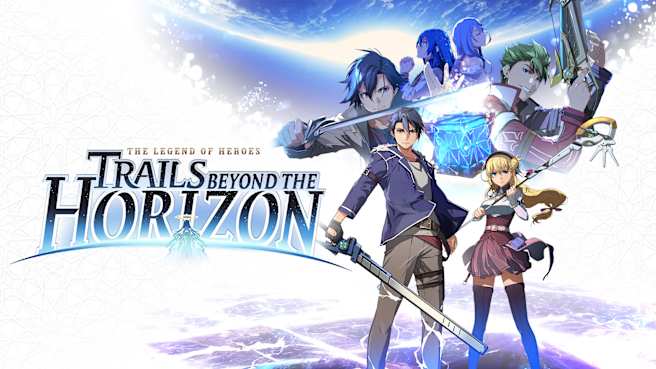
When a series like Trails has been around for as long as it has, things are bound to get a little unusual. We’ve encountered massive mechs, supernatural forces, and even adventures involving multiversal time travel. So, what’s next? Outer space, of course! The Legend of Heroes: Trails Beyond the Horizon ventures into the cosmos to deliver a thrilling sci-fi fantasy story full of intrigue and deception. It also further refines the Daybreak saga’s hybrid action/turn-based combat system, offering battles that feel more dynamic and engaging than ever. While the cliffhanger ending might leave some players uneasy, the game ultimately lands as another captivating RPG experience.
Continuing directly from Trails Through Daybreak 2, Trails Beyond the Horizon follows the nation of Calvard as it prepares humanity’s first manned space mission, known as Project Startaker. Much like Trails into Reverie, the game’s 60–70 hour campaign is told from three perspectives: Rean Schwarzer from the Trails of Cold Steel saga, Kevin Graham from Trails in the Sky the 3rd, and Van Arkride, the mercenary hero from the Daybreak series. The game handles these multiple viewpoints effectively, but it’s not ideal for newcomers. Although Van takes a leading role, each character is treated as a “main” protagonist in their own right, meaning players should be familiar with the two prior Daybreak titles, the Cold Steel saga, Reverie, and the third Sky game to fully understand the story.
That said, the story stands strong on its own. Rean’s route is particularly gripping, keeping players hooked as he uncovers the true purpose of Project Startaker and the conspiracy surrounding it. Kevin’s storyline is equally engaging, as he resumes his role as the “Heretic Hunter,” learning more about his assassination target and struggling with the moral weight of his mission. Surprisingly, Van’s chapter is the least exciting at first. His path, which follows him and his crew battling a mysterious new faction called the Vestiges, is as long as the other two routes combined. While this makes sense since the game is ultimately his story, the first half drags, making Rean and Kevin’s faster-paced adventures feel far more compelling. Still, the way all three narratives converge around Van toward the finale redeems the slower buildup.
Trails Beyond the Horizon also handles the potential character overload better than some previous Trails crossovers. Only a handful of notable faces from Rean’s Thors Academy days appear, including the energetic student council president Towa Herschel and the calm, calculating Altina Orion. Kevin’s cast brings along Reverie favorites Rufus, Nadia, Swin, and Lapis, while new characters for both him and Van are introduced sparingly, keeping the focus tight and the story manageable.
Don’t mend things that aren’t broken
If you’ve played Daybreak 2, some parts of this review may sound familiar, since Trails Beyond the Horizon follows a very similar formula outside of combat. For example, the Marchen Garten roguelite dungeon returns as Grim Garten, working in much the same way. Players move across a board via a minigame, battling monsters until reaching a floor boss. Only the first half of Grim Garten is required for the story, with the second half being optional. Unfortunately, unlike Marchen Garten in Daybreak 2, Grim Garten cannot be revisited after the credits, which slightly diminishes the post-game experience that allowed players to wrap up side activities before starting New Game Plus.
Still, Grim Garten offers worthwhile rewards that make it worth exploring during the story. Players can earn skill points to enhance party attacks, unlock cosmetics and useful items—all obtained in-game without microtransactions—and uncover additional character backstories, which is especially intriguing for certain antagonists. Optional content has always been a staple of the Trails series, and Beyond the Horizon continues that tradition with deep side quests and enjoyable bonding events. These activities not only provide rare items but also deepen understanding of the world and its inhabitants. For instance, Rean asks Van to handle city bulletin requests on his behalf, letting him experience the mercenary life firsthand. A standout side quest involved uncovering an illegal casino chip trade orchestrated by a recurring villain first introduced in the Crossbell games (Trails from Zero and Trails to Azure), a nod to the series’ rich 16-year history.
The LGC morality system from the first two Daybreak games also returns, allowing Rean, Van, and Kevin to choose outcomes that shift their affinity toward Law, Gray, or Chaos after completing quests. In previous games, this system influenced which allies joined Van in later chapters. Unfortunately, like in Daybreak 2, it has no meaningful impact in Beyond the Horizon, leaving the mechanic feeling underdeveloped. This is especially disappointing given the potential for interesting outcomes—imagine a “chaos” aligned Rean reminiscent of his berserk form in Cold Steel III and IV.
On the bright side, bonding events, known as Connections, remain as engaging as ever. They allow players to spend time with party members during key story moments, offering both meaningful character development and gameplay benefits, such as increased stats or improved chances of follow-up attacks in battle. One memorable event involved Rufus reflecting with Kevin on his life journey. Introduced in the first Cold Steel game, Rufus was once a high-ranking noble admired by all. Years later, he lives quietly, caring for children in the shadows, yet remains content—a full-circle moment that brought back memories of starting the Trails series on my PlayStation Vita during college.
Like the previous Daybreak titles, Trails Beyond the Horizon employs a hybrid combat system that blends real-time action with traditional turn-based mechanics. While exploring the field, you can attack enemies in real time to stagger them, giving you an advantage when transitioning into turn-based combat and allowing you to deal extra damage from the outset. This system, which was exciting but imperfect when first introduced, feels more refined and dynamic here.
New mechanics, such as ZOC abilities, let players temporarily pause time to land additional hits, but the most notable addition is the Awakening system. Van, Rean, and Kevin can activate these powerful boosts—Rean’s Spirit Unification, Van’s Grendel, and Kevin’s Stigma—enhancing their damage output before entering turn-based battles. These Awakenings cleverly integrate story-driven power-ups with mechanics that were previously exclusive to turn-based combat, creating a satisfying real-time layer. While the series’ strength will always lie in its turn-based battles, Falcom’s ongoing improvements to the real-time elements make them more engaging and enjoyable than ever.
The field battles feel more realistic with more improvements
The core turn-based combat in Trails Beyond the Horizon largely mirrors previous Daybreak and broader Trails entries. At the top of the screen, a turn order timeline lets you plan and manipulate actions strategically. Bonus icons periodically appear on the timeline for allies or enemies, offering effects like instant spell casting or healing bursts. Keeping an eye on these bonuses is essential, as they can shift the momentum of battle and add a puzzle-like layer to combat.
The “stealing” mechanic has been refined from Daybreak 2. Previously, players could only steal bonuses from stunned or unconscious enemies. Now, activating a Shard Boost from your Boost Gauge and then attacking an enemy lets you capture any bonus aligned with them, upgrading it into a more powerful “Plus” version. For instance, stealing a Zero Arts bonus now casts your next spell immediately and boosts its power by 50%, adding another strategic dimension to battles.
Delay skills have also received an update. Successfully delaying an enemy while under a Shard Boost now generates a “Plus” version of that bonus on the timeline for the next turn, giving players more tactical options. These enhancements, though subtle, make a meaningful difference, particularly against tougher foes later in the game.
Positioning remains a critical aspect of combat. Each skill has a specific attack pattern—circle, cross, or straight line—so placing characters effectively maximizes damage. Skills often have secondary effects; for example, Rean’s Sixfold Gales can inflict Delay, and dealing damage from behind boosts its potency. Even if a back attack isn’t possible, the Delay effect still helps manipulate the timeline. These thoughtful mechanics, combined with consistent improvements across the series, make the combat system in Beyond the Horizon uniquely engaging and strategically deep.
Verdict
After its predecessor focused more on interpersonal stories than advancing the Calvard saga, The Legend of Heroes: Trails Beyond the Horizon feels almost like an overcorrection, packing the plot-heavy narratives of three protagonists into a single adventure. Fortunately, dividing the story into three separate routes makes it far more manageable. Although the main hero is somewhat overshadowed by the other characters early on, the game eventually weaves their paths together in a satisfying way and delivers a strong conclusion. The new additions to both turn-based and real-time combat further refine an already engaging system. While the cliffhanger ending may divide opinions, Trails Beyond the Horizon sets up an exciting foundation for the series’ next chapter.
